
King-Devick Test PDF: A Comprehensive Overview (Updated 11/28/2025)
The King-Devick (K-D) test‚ a rapid number naming assessment‚ is readily available as a PDF resource for standardized administration and training purposes‚
particularly within protocols like the NCAA/DoD CARE.
What is the King-Devick Test?
The King-Devick (K-D) test is a neurocognitive assessment tool utilized to measure the speed of rapid number naming. It’s a quick‚ practical method – requiring less than two minutes to administer – making it suitable for sideline evaluations‚ and often quicker than more comprehensive cognitive tests.
Fundamentally‚ the K-D test is based on measurement of the speed of rapid number naming‚ assessing visual attention and processing speed. The test exists in two formats: traditional spiral-bound cards and a digital tablet version‚ both accessible as PDF resources for standardized use.
Within research contexts‚ like the NCAA/DoD CARE protocol involving 830 collegiate athletes‚ the K-D test serves as a baseline and monitoring tool. Its simplicity and speed contribute to its widespread adoption in concussion assessment and post-concussion recovery tracking.
The Core Principle: Rapid Number Naming
The foundational principle of the King-Devick (K-D) test centers on assessing an individual’s ability to rapidly and accurately name a sequence of numbers; This seemingly simple task taps into crucial neurocognitive functions‚ including visual attention‚ processing speed‚ and oculomotor skills – the coordinated movement of the eyes.

The PDF resources detailing the K-D test emphasize the importance of speed; the faster a participant can accurately name the numbers‚ the better their cognitive performance is considered. This speed is then measured and compared to baseline assessments or normative data.
Researchers have found that slowed rapid number naming times can be indicative of neurological disruption‚ particularly following a concussion. The test’s reliance on this core principle makes it a valuable tool‚ readily available through PDF guides‚ for quick cognitive screening.
History and Development of the K-D Test
The King-Devick Test originated from research focused on identifying objective markers of concussion‚ recognizing the limitations of relying solely on subjective symptom reporting. Developed by Dr. Steven Devick and colleagues‚ the test’s initial iterations aimed to provide a quick‚ easily administered assessment for sideline use.
Over time‚ the K-D test evolved‚ with versions available as both traditional cards and a digital tablet application. PDF documentation outlining the test’s procedures and scoring has been crucial for standardization across various settings‚ including collegiate athletics and military applications.
The integration of the K-D test into the NCAA/DoD CARE protocol significantly broadened its use and spurred further research into its reliability and validity. Access to the test’s guidelines via PDF format has facilitated widespread adoption and consistent implementation.

Understanding the Test Format
The K-D test utilizes either spiral-bound cards or a tablet version‚ each presenting numbers for rapid naming; PDF resources detail these formats for proper administration.
K-D Test Versions: Cards vs. Tablet

The King-Devick Test is available in two primary formats: a traditional card version and a modern tablet-based version. PDF documentation from King-Devick Test‚ Inc. outlines the specifics of each. The card version consists of four spiral-bound cards displaying randomly arranged numbers‚ requiring a test administrator to present them sequentially. Conversely‚ the tablet version presents the same numerical sequences on a digital screen‚ automating the presentation process.
While both versions assess the same cognitive skill – rapid number naming – there are practical differences. The card version is portable and doesn’t require power‚ making it suitable for remote or resource-limited settings. The tablet version offers automated timing and data recording‚ potentially reducing human error and streamlining the scoring process. Recent research‚ involving 830 NCAA athletes‚ indicates that baseline KD assessments utilized both card (n=2303) and tablet (n=945) versions‚ demonstrating the acceptance and comparability of both methods as detailed within the official PDF guidelines.
Number of Cards/Screens in a Standard Test
A standard King-Devick Test administration‚ as detailed in the official PDF resources provided by King-Devick Test‚ Inc.‚ utilizes a fixed number of visual stimuli. Regardless of whether the card or tablet version is employed‚ the test consists of four individual presentation units. With the traditional card version‚ this translates to four separate cards‚ each displaying a unique arrangement of numbers.
For the tablet-based version‚ the test is structured around four distinct screens‚ each mirroring the numerical content of its corresponding card. This consistent format ensures standardized assessment across different administration methods. The PDF emphasizes that all four cards/screens must be presented in a predetermined order to maintain test validity. Data from a study involving 830 NCAA athletes confirms adherence to this four-card/screen protocol as part of the NCAA/DoD CARE protocol‚ highlighting its importance for reliable baseline and post-injury evaluations.
Test Administration: Student Positioning & Instructions
Proper King-Devick Test administration‚ as outlined in the official PDF guidelines‚ prioritizes standardized student positioning and clear instructions. The PDF emphasizes the student should be seated with good posture‚ maintaining an arm’s length distance from the cards or tablet screen. Eye level should align with the top of the screen or cards for optimal viewing.
Crucially‚ students are instructed to keep their head still‚ relying solely on eye movements to scan and name the numbers. The PDF explicitly warns against using a finger to follow along‚ as this can artificially improve performance. Verbal instructions should clearly state the task: rapidly and accurately name each number presented. Consistent application of these guidelines‚ detailed within the PDF‚ is vital for obtaining reliable and comparable results‚ particularly within research settings like the NCAA/DoD CARE protocol involving 830 collegiate athletes.
Maintaining Proper Posture During Testing
The King-Devick Test PDF resource strongly emphasizes maintaining proper posture throughout the assessment. Detailed instructions within the PDF specify students should sit upright‚ avoiding slouching or leaning forward. This standardized positioning minimizes extraneous head movement‚ ensuring the test accurately measures saccadic eye movements – the core principle of the K-D test.
The PDF highlights that a stable posture contributes to reliable data collection‚ particularly important in longitudinal studies like the NCAA/DoD CARE protocol involving over 800 athletes. Any deviation from the recommended posture could potentially influence test times. Therefore‚ proctors utilizing the PDF guidelines should actively monitor and gently correct any postural issues observed during testing‚ ensuring consistent conditions for all participants and maximizing the validity of the results.
Eye Movement Focus: Avoiding Finger Following
The King-Devick Test PDF explicitly instructs students to maintain eye movement control during the assessment‚ crucially emphasizing the avoidance of “finger following.” The PDF details that participants must move their eyes only to scan the numbers on each card or screen‚ refraining from using a finger or other visual aid to track their progress.
This instruction is paramount because finger following introduces an artificial constraint‚ slowing down saccadic eye movements and invalidating the test’s core measurement of rapid number naming speed. The PDF reinforces this point for proctors administering the test‚ particularly within research contexts like the NCAA/DoD CARE protocol. Consistent adherence to this guideline‚ as outlined in the PDF‚ ensures accurate and comparable data across all participants‚ contributing to the reliability of concussion assessments.

Scoring and Interpretation
The King-Devick Test PDF details how KD test times are measured‚ establishing benchmarks and identifying slowed times as potential concussion indicators for athletes.
How KD Test Times are Measured
The King-Devick Test PDF provides detailed instructions on accurately measuring test times; The assessment involves participants rapidly naming numbers and letters presented on cards or a tablet screen. KD test times are recorded in seconds‚ representing the total time taken to complete each card or screen.
Typically‚ two trials are administered annually‚ prior to the athletic season‚ as part of the NCAA/DoD CARE protocol. The PDF emphasizes consistent administration‚ noting that the test requires less than two minutes. Scoring focuses on the time elapsed for each set of numbers‚ with slower times potentially indicating cognitive impairment.
The PDF also clarifies that the test utilizes either spiral-bound cards (with four cards) or a tablet version (with four screens). Accurate timing is crucial for establishing baseline data and monitoring changes post-injury‚ as detailed within the official documentation.
Baseline KD Assessment: Establishing a Benchmark
The King-Devick Test PDF stresses the importance of a baseline assessment before sport activity. This initial test‚ performed using either the card or tablet version‚ establishes an individual’s typical KD performance. A baseline KD assessment is crucial for comparison should a concussion occur‚ allowing for objective evaluation of cognitive function.
The PDF outlines that all participants in protocols like the NCAA/DoD CARE undergo this pre-season assessment. Data from 830 NCAA athletes demonstrates consistent implementation of this baseline procedure. Establishing this benchmark involves two trials‚ ensuring a reliable representation of the athlete’s cognitive speed.
The PDF emphasizes adherence to manufacturer recommendations for consistent testing. This baseline data‚ documented within the PDF’s guidelines‚ serves as the foundation for identifying potential cognitive changes following a head injury.
Identifying Slowed KD Times as a Potential Indicator
The King-Devick Test PDF highlights that a significant slowing of KD times‚ compared to an individual’s established baseline‚ can be a potential indicator of cognitive impairment‚ often associated with concussion. The PDF details how deviations from the baseline are evaluated within comprehensive concussion protocols.

Research‚ including studies involving 830 NCAA athletes‚ demonstrates the utility of KD times in identifying potential concussion cases. The PDF emphasizes that slowed times aren’t definitive diagnoses‚ but rather flags for further evaluation.
The PDF explains that this assessment is often integrated with symptom scoring‚ balance assessments‚ and other cognitive tests for a holistic diagnostic approach. Specifically‚ in a study of eight players‚ slowed KD times correlated with confirmed concussions‚ reinforcing its value as an initial screening tool‚ as detailed in the PDF.
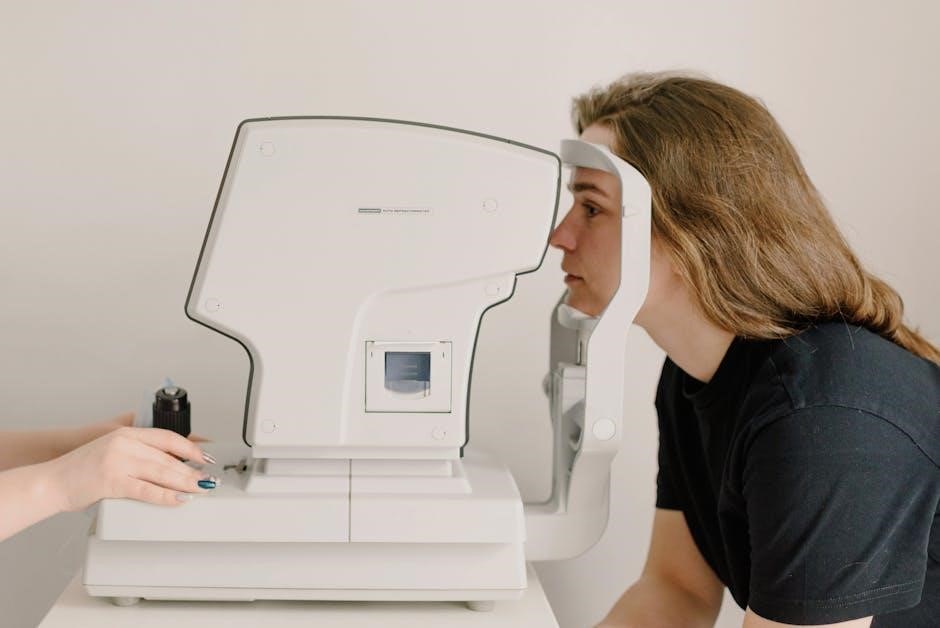
Applications of the King-Devick Test
The King-Devick Test PDF details its use in concussion assessment‚ particularly within collegiate athletics and the NCAA/DoD CARE protocol‚ aiding recovery monitoring.
Concussion Assessment in Collegiate Athletes
The King-Devick Test PDF outlines its crucial role in evaluating concussions among NCAA student-athletes‚ forming a key component of the NCAA/DoD CARE protocol. A study involving 830 athletes demonstrated annual K-D testing before each season‚ utilizing either card or tablet versions‚ as per manufacturer recommendations.

This standardized approach‚ detailed within the PDF‚ allows for baseline assessments‚ establishing individual benchmarks for cognitive function. The test’s practicality – requiring under two minutes to administer – makes it ideal for sideline use‚ offering a quicker cognitive evaluation compared to other methods.
The PDF emphasizes consistent protocol adherence‚ including proper student positioning and instructions‚ to ensure reliable data collection. Slowed K-D times‚ as documented in the PDF’s guidelines‚ can serve as a potential indicator of concussion‚ prompting further evaluation.
Use in the NCAA/DoD CARE Protocol
The King-Devick Test PDF details its integration within the NCAA/DoD CARE (Concussion Assessment‚ Research and Education) protocol‚ a comprehensive system for concussion management in collegiate athletes. The PDF specifies that all participants undergo baseline K-D assessments annually‚ utilizing either the spiral-bound card version (n=2303) or the tablet version (n=945)‚ ensuring standardized testing procedures.
The protocol‚ as outlined in the PDF‚ involves two trials per year‚ performed before the start of each athletic season. This pre-season baseline is critical for comparison should a suspected concussion occur. The PDF emphasizes adherence to manufacturer recommendations for test administration‚ ensuring data reliability.
Furthermore‚ the PDF serves as a training resource for personnel administering the test‚ promoting consistency across institutions participating in the CARE protocol. This standardized approach enhances the protocol’s effectiveness in identifying cognitive impairment post-injury.
Post-Concussion Recovery Monitoring
The King-Devick Test PDF highlights its utility in monitoring recovery following a concussion‚ particularly regarding the “learning effect.” Research detailed within the PDF demonstrates that acutely concussed adolescents exhibiting a typical learning effect on the K-D test tend to recover faster than those who do not.
This learning effect – an improvement in KD test times across repeated administrations – is a key indicator tracked using the PDF’s guidance. The PDF explains how slowed KD times‚ compared to baseline‚ can signal ongoing cognitive impairment. Integrating the K-D test with the Buffalo Concussion Treadmill Test‚ as described in the PDF‚ provides a more nuanced assessment.
The PDF emphasizes that consistent monitoring with the K-D test allows medical staff to objectively track recovery progress and make informed return-to-play decisions‚ prioritizing athlete safety.
The Learning Effect and Recovery Time
The King-Devick Test PDF details the significance of the “learning effect” – the observed improvement in KD test times with repeated administrations – as a crucial factor in predicting concussion recovery time. Studies referenced within the PDF show a strong correlation between demonstrating this learning effect and a faster return to baseline cognitive function.
Specifically‚ the PDF highlights research involving acutely concussed adolescents where those without the typical learning effect experienced prolonged recovery periods. This suggests the absence of improvement on the K-D test‚ as outlined in the PDF protocols‚ may indicate a more complicated or prolonged concussion course.
The PDF emphasizes that tracking this effect is vital for clinicians‚ providing objective data to inform return-to-play decisions and personalize rehabilitation strategies. Understanding the learning effect‚ as detailed in the PDF‚ is paramount for effective post-concussion management.
Integration with Other Concussion Evaluation Tools
The King-Devick Test PDF stresses that the K-D test is most effective when integrated as part of a comprehensive concussion evaluation‚ rather than used in isolation. The PDF outlines its compatibility with other standard cognitive assessments‚ symptom scoring‚ and balance evaluations‚ forming a multi-faceted diagnostic approach.
Specifically‚ the PDF references its inclusion within the NCAA/DoD CARE protocol‚ alongside other tools‚ to provide a more robust assessment of cognitive function post-injury. The PDF highlights that combining K-D results with these additional measures enhances diagnostic accuracy and supports informed clinical decision-making.
Furthermore‚ the PDF suggests that the K-D test can complement tools like the Buffalo Concussion Treadmill Test‚ offering a broader understanding of recovery progress. Utilizing the PDF’s guidance‚ clinicians can create a holistic evaluation strategy for optimal concussion management.

King-Devick Test PDF Resources
Official K-D Test PDFs are available from King-Devick Test‚ Inc.‚ providing standardized materials for baseline and post-injury assessments‚ aiding training and protocol adherence.
Locating Official K-D Test PDFs
Finding authentic King-Devick Test PDFs requires accessing the official source: King-Devick Test‚ Inc.‚ located in Oakbrook Terrace‚ IL. These PDFs are crucial for maintaining test standardization and ensuring reliable results‚ especially within research settings and clinical applications like the NCAA/DoD CARE protocol.
Avoid downloading PDFs from unofficial websites‚ as these may contain outdated or inaccurate versions of the test‚ potentially compromising data integrity. The official website provides access to both the card and tablet versions of the K-D test in PDF format‚ catering to different administration preferences.
Access often requires registration or a purchase‚ depending on the intended use (e.g.‚ individual clinician‚ research institution). The PDFs include detailed instructions‚ scoring guidelines‚ and normative data‚ essential for proper test implementation and interpretation. Always verify the PDF’s source and date to ensure you are using the most current version.
Understanding the Information Contained in the PDF
The official King-Devick Test PDF is a comprehensive document detailing every aspect of test administration. It outlines the precise student positioning – arms length from the screen‚ eyes level‚ and maintaining a still head with only eye movements. Crucially‚ it emphasizes avoiding finger following during rapid number naming.
The PDF specifies the test format: either four spiral-bound cards or four screens on the tablet version. It provides clear instructions for both versions‚ ensuring consistency. Detailed scoring guidelines are included‚ explaining how KD test times are measured and interpreted as potential indicators of cognitive impairment.
Furthermore‚ the PDF details the recommended protocols‚ such as performing two trials annually as part of the NCAA/DoD CARE protocol‚ and highlights the importance of baseline assessments before athletic seasons. It’s a vital resource for standardization.
Using the PDF for Training and Standardization
The King-Devick Test PDF serves as an invaluable training tool for administrators‚ ensuring consistent and accurate test delivery. It provides detailed visual examples of proper card/screen presentation and student positioning‚ reinforcing the importance of maintaining an arm’s length distance and eye-level alignment.
Standardization is paramount; the PDF clarifies the precise instructions to be given to the student‚ emphasizing the need for rapid number naming without finger following. It outlines the scoring methodology‚ ensuring all administrators measure KD times identically.
Regular review of the PDF is recommended for all personnel involved in concussion assessment‚ particularly within the NCAA/DoD CARE protocol. This guarantees adherence to the manufacturer’s recommendations and minimizes variability in test results‚ ultimately improving the reliability of the data collected.

Research and Studies
Recent studies‚ including one with 830 NCAA athletes‚ utilized the King-Devick Test PDF protocol annually to assess baseline and post-injury cognitive function.
Sample Size and Demographics in Recent Studies (e.g.‚ 830 NCAA athletes)
A significant study involved 830 NCAA collegiate student-athletes from five institutions‚ providing a robust sample size for evaluating the King-Devick Test PDF’s efficacy. Participants were assessed annually over two years as part of the NCAA/DoD CARE protocol‚ ensuring consistent data collection. The demographic profile revealed an average age of 20.2 ± 1.3 years‚ an average height of 180.0 ± 11.1 cm‚ and an average weight of 82.6 ± 21.5 kg.
Data was gathered using both the spiral-bound card version (n=2303 trials) and the tablet version (n=945 trials) of the K-D test‚ allowing for a comparison of administration methods. Baseline assessments were completed before each participant’s intercollegiate athletic season‚ adhering to the manufacturer’s recommendations and standardized protocols outlined in the PDF guidelines.
Age‚ Height‚ and Weight Considerations in Research
Research utilizing the King-Devick Test PDF demonstrates the importance of considering age‚ height‚ and weight when interpreting results. The recent study involving 830 NCAA athletes (average age 20.2 ± 1.3 years) highlights these factors. While the K-D test assesses cognitive function‚ physical characteristics can influence performance metrics.
Specifically‚ the study reported an average height of 180.0 ± 11.1 cm and weight of 82.6 ± 21.5 kg among participants. These demographic details are crucial for establishing normative data and identifying potential outliers. The PDF resources emphasize standardized administration‚ but acknowledging these variables is vital for accurate interpretation. Further research is needed to determine the extent to which these factors correlate with K-D test scores and impact concussion assessment protocols.
KD Test Performance and Athletic Season Timing
Utilizing the King-Devick Test PDF for pre-season baseline assessments is a key component of the NCAA/DoD CARE protocol. Research indicates that KD test performance is consistently evaluated prior to the start of each collegiate athlete’s intercollegiate season. This timing is critical for establishing a reliable benchmark against which to compare post-injury scores.
The PDF guides emphasize the importance of consistent testing procedures throughout the athletic year. Monitoring KD test times in relation to season progression can help identify subtle cognitive changes that might otherwise go unnoticed. Establishing these pre-season baselines‚ documented within the PDF guidelines‚ allows for more accurate post-concussion evaluations and informed return-to-play decisions‚ ensuring athlete safety and optimal performance.